Choosing a homesite in Palmetto Bluff can feel exciting and a little overwhelming at the same time. With thousands of acres, distinct neighborhoods, and settings that range from wooded privacy to riverfront views, the right lot is rarely just about price or size. If you want to make a confident decision, it helps to look at how the homesite supports your lifestyle, your home design, and your long-term plans. Let’s dive in.
Start With How You Want to Live
In Palmetto Bluff, homesite selection is really about matching a parcel to the way you want to spend your time. The community’s official search tools sort homesites by settings like park, wooded, village, marsh, lake, riverfront, inland waterway, and woods, which reflects how important lifestyle and view are in the decision-making process. You can explore that broader community overview through Palmetto Bluff’s official community information.
Before you compare neighborhoods, it helps to get clear on your priorities. Some buyers want to step out the door and walk to dining, shops, or club amenities, while others want more separation, more green space, and a quieter setting.
A simple way to begin is to ask yourself:
- Do you care more about walkability or privacy?
- Is your ideal backdrop marsh, lake, river, park, or woods?
- Do you want a homesite that supports a large outdoor living area?
- Are you planning a fully custom home or a more streamlined build path?
- Will rental flexibility matter to you in the future?
Compare Town and Country Settings
One of the clearest ways Palmetto Bluff frames its neighborhoods is through town and country living. According to the community’s own neighborhood guide, town areas emphasize walkability and close access to amenities, while country areas generally offer larger, more private homesites with more space between homes. You can see that distinction in this overview of town and country neighborhoods.
If you enjoy being near activity, village-style living may feel like the best fit. If you picture a more tucked-away retreat with a stronger sense of seclusion, a country-style location may be the better match.
Neither option is inherently better. The right choice depends on how you define comfort, convenience, and everyday enjoyment.
Focus on View, Orientation, and Privacy
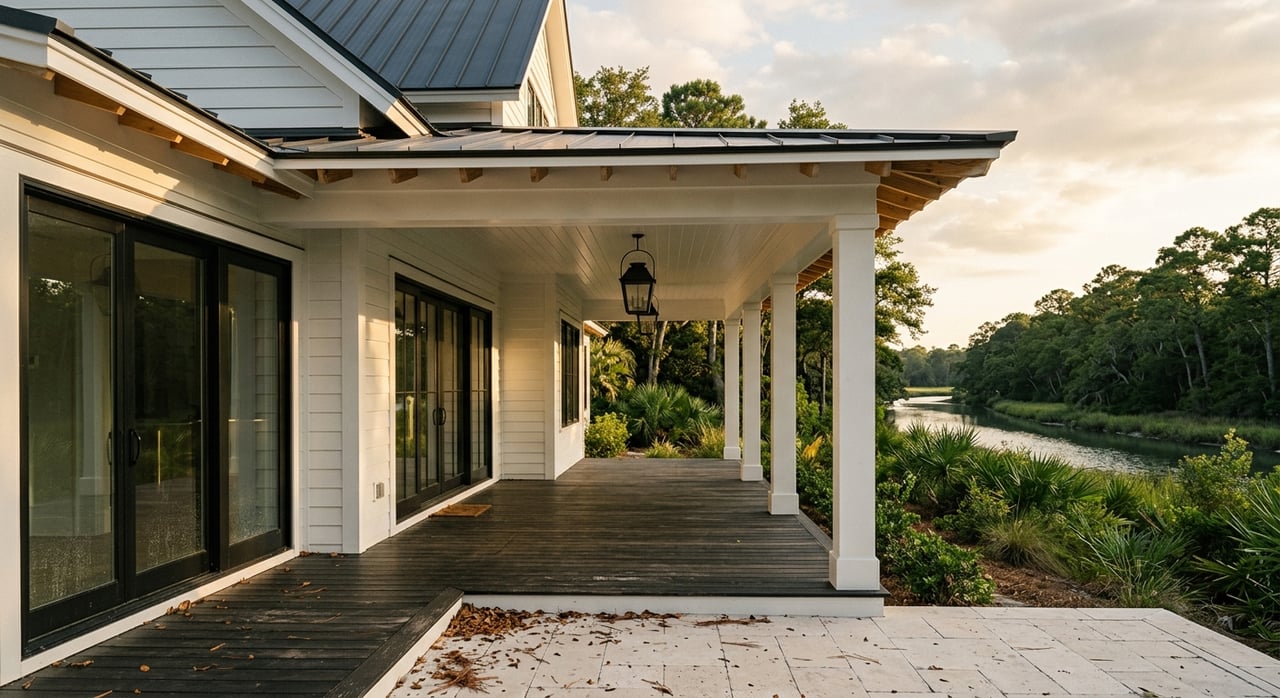
A beautiful view can shape the entire experience of your future home, but so can sunlight, breezes, and the position of nearby roads or neighboring homes. Palmetto Bluff’s architectural guidance notes that homes should be oriented to maximize coastal views and breezes, which means lot shape and street position matter early in the process. You can review those design principles in the community’s architecture and design guidance.
This is one reason buyers often benefit from looking beyond the listing sheet. Two homesites with similar dimensions can live very differently depending on orientation, tree cover, and how a future home will sit on the parcel.
When you evaluate a lot, consider:
- The primary view from the main living spaces
- Morning and afternoon light exposure
- The placement of outdoor living areas
- How much privacy you will have from adjacent homes or roads
- Whether the lot shape supports the home you want to build
Understand How the Neighborhoods Differ
Palmetto Bluff offers several distinct neighborhoods, and each one appeals to a slightly different buyer. Looking closely at these differences can save you time and help you narrow your search.
Wilson Village
Wilson Village is the original village and one of the community’s most established settings. It places residents close to shops, restaurants, the May River, and Wilson Landing, making it especially appealing if proximity and classic Lowcountry atmosphere are high on your list.
If you want a location where you can stay connected to the center of community activity, Wilson Village often stands out.
River Road
River Road sits between Wilson Village and Moreland Village and is described as the Garden District. It blends preserve adjacency and green space with access to The Lodge, which includes a fitness center, playground, dog park, lounge, and zero-entry pool.
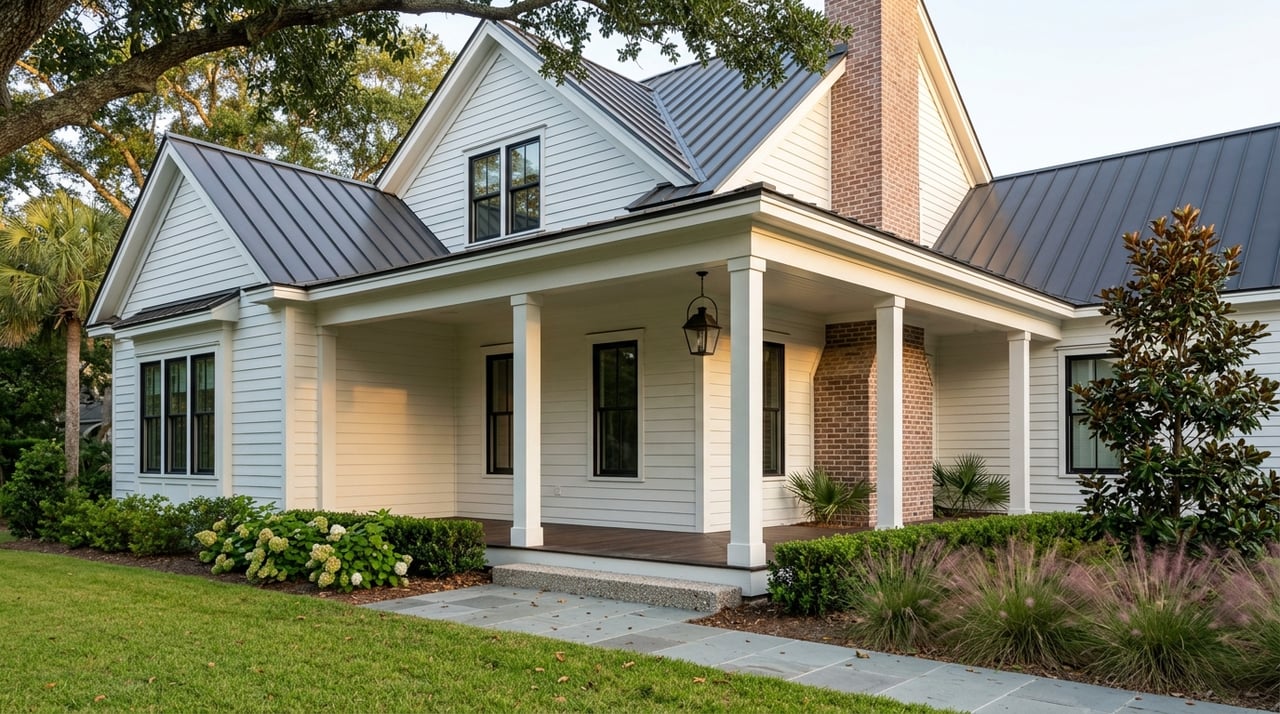
Architecturally, River Road has a more formal and classic look with Charleston and Savannah influences. For buyers who want privacy, amenities, and a more traditional design language, this area often deserves a close look.
Moreland Village
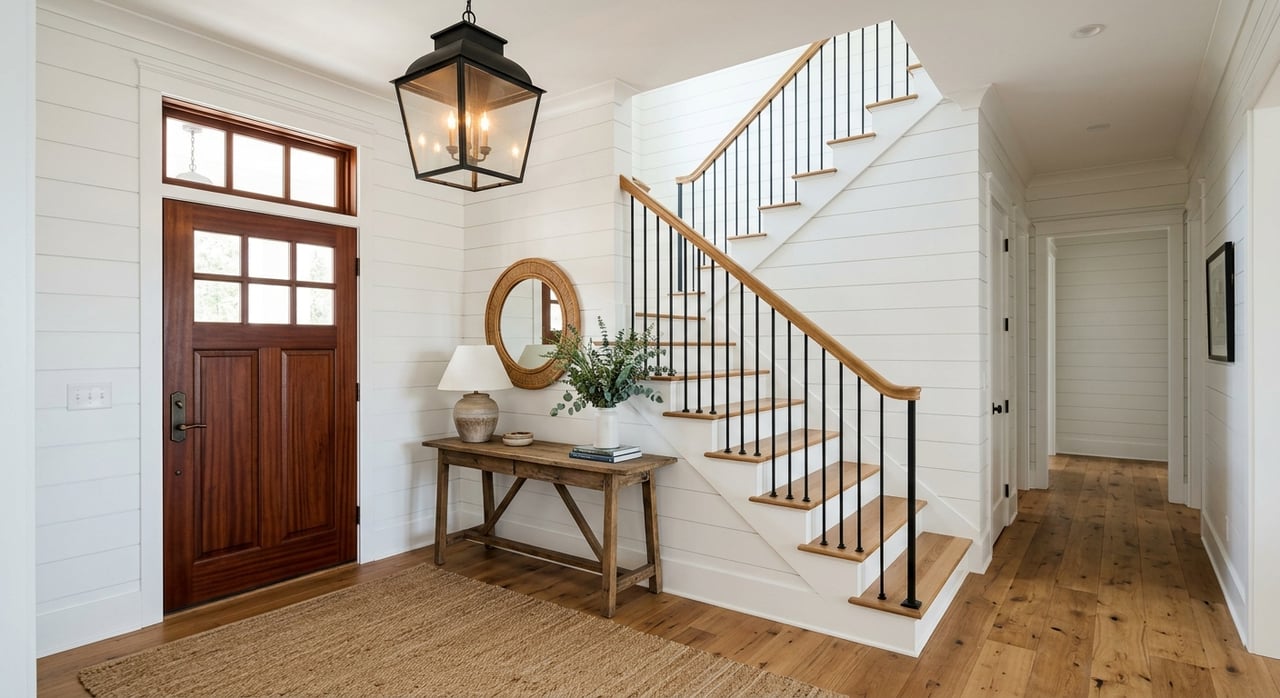
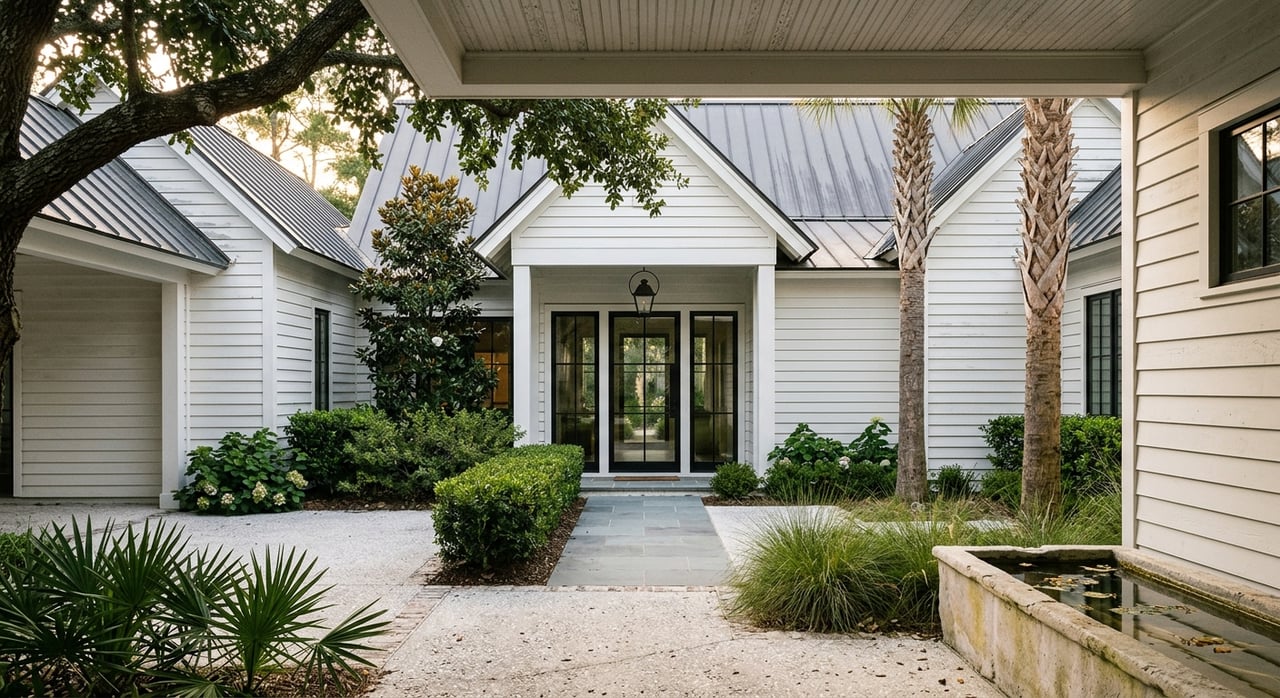
Moreland Village offers a different feel. Palmetto Bluff describes it as rustic yet contemporary, with lower roof slopes, exposed rafter tails, steel windows and doors, more natural light, and a more relaxed coastal sensibility.
This area also provides access to The Boundary wellness facility, The Canteen, bowling, and retail. If you are drawn to a more contemporary architectural expression and a laid-back setting, Moreland Village may feel like a natural fit.
Moreland Forest and The Grove
Moreland Forest is the newest residential offering and is centered around trails, the inland waterway, and Crossroads golf. The latest release includes homesites ranging from 0.33 to 0.51 acres, and the inland waterway network there extends to 7.5 miles.
Within Moreland Forest, The Grove offers 12 homesites and three homeplans for buyers who want a more streamlined route to ownership. If you like newer inventory and want strong access to outdoor recreation, this area is worth exploring.
Let Architecture Guide the Lot Choice
In many communities, buyers choose a floor plan first and then try to make it fit the lot. In Palmetto Bluff, the process often works the other way around. The community’s custom builder process is designed so that floor plans complement the homesite and maximize views, rather than forcing the same plan onto every parcel. You can learn more through Palmetto Bluff’s builder process overview.
That matters because your homesite affects almost every design decision, from where the front porch belongs to how much room you have for a pool, guest suite, or outdoor kitchen. A lot that looks perfect on paper may become less ideal if it compromises the home experience you want.
Review Design Rules Early
Palmetto Bluff’s Design Review Board helps protect the natural setting and maintain a cohesive regional look. Every submission requires professional design work, including South Carolina-registered architects and landscape architects, according to the community’s architecture requirements.
This is not a detail to leave until later. Before you commit to a homesite, make sure you understand the architectural expectations for that area and whether your preferred style aligns with them.
This step is especially important if you are deciding between neighborhoods with noticeably different design character, such as River Road and Moreland Village.
Check Flood Exposure Before Closing
Because Palmetto Bluff is a coastal community, flood exposure should be part of your due diligence. Beaufort County uses FEMA Flood Insurance Rate Maps to regulate development in special flood hazard areas, and FEMA notes that an elevation certificate documents first-floor height and can help determine flood insurance pricing. You can review local guidance through Beaufort County flood map resources.
This does not mean a homesite is unsuitable. It means you should understand the property clearly before you close, including possible insurance implications and any elevation-related considerations.
If Investment Matters, Verify Rental Rules
If you may use the property as an investment or want future rental flexibility, check the rules early. Palmetto Bluff’s short-term rental policy states that club-access rentals are limited to designated rental areas, require registration, and classify stays of less than six months for a fee as short-term rentals. Those details are outlined in the community’s short-term rental policy guidelines.
If income potential is part of your strategy, this can narrow the field quickly. It is far better to confirm rental eligibility before purchase than to discover restrictions later.
Build a Full Budget, Not Just a Lot Budget
Homesite pricing in Palmetto Bluff covers a wide range. According to the community’s 2025 market recap, there were 12 active homesite listings averaging $901K and 52 homesite closings averaging $1.08M, while another community article states that current homesite prices range from $545K to $2.995M. You can review that context in Palmetto Bluff’s 2025 real estate recap.
That is only part of the picture. A separate NAHB construction cost study shows why lot price is just one part of the total project budget, with construction and finished lot cost both playing major roles in final pricing.
In practice, many custom Palmetto Bluff projects will land in the multimillion-dollar range once you combine the homesite, design, construction, site work, and landscaping. If you start with a clear all-in budget, you can avoid falling in love with a lot that leaves too little flexibility for the home you actually want to build.
Watch Where Demand Is Moving
Market activity can also offer clues. Palmetto Bluff reports that River Road and Moreland Forest accounted for more than half of all community transactions in 2025, suggesting that privacy-plus-amenity locations are drawing strong demand. That does not make them the right choice for every buyer, but it is a useful signal if you are thinking about long-term appeal and resale.
When you see where buyers are gravitating, it can sharpen your own decision-making. Sometimes the most helpful question is not “Which lot is best?” but “Which lot will still feel right to me five or ten years from now?”
A Smart Homesite Decision Is Personal
The best homesite in Palmetto Bluff is not the most expensive one or the one with the broadest feature list. It is the one that fits your pace, your design goals, and the way you want to experience the Lowcountry every day.
If you want clear, discreet guidance as you compare neighborhoods, evaluate lot tradeoffs, and think through the full ownership picture, Lori Whatley offers private, concierge-level support rooted in firsthand Palmetto Bluff knowledge.
FAQs
What should you prioritize when choosing a homesite in Palmetto Bluff?
- Start with your lifestyle priorities, especially walkability, privacy, preferred view, and the type of home you want to build.
How do Palmetto Bluff neighborhoods differ for homesite buyers?
- Wilson Village emphasizes proximity to shops, restaurants, and the river, while River Road, Moreland Village, and Moreland Forest each offer different mixes of privacy, amenities, and architectural character.
Why does lot orientation matter in Palmetto Bluff?
- Orientation affects views, natural light, breezes, privacy, and how well your future home and outdoor spaces will function on the lot.
What design rules apply to building in Palmetto Bluff?
- The Design Review Board requires professional submissions and the use of South Carolina-registered architects and landscape architects, with standards intended to protect the community’s natural and architectural character.
How should flood risk affect a Palmetto Bluff homesite purchase?
- You should verify flood exposure before closing by reviewing FEMA and Beaufort County resources and understanding any potential elevation or insurance considerations.
What should investors know about Palmetto Bluff rental rules?
- Short-term rentals with club access are limited to designated rental areas, require registration, and generally apply to stays of less than six months for a fee.