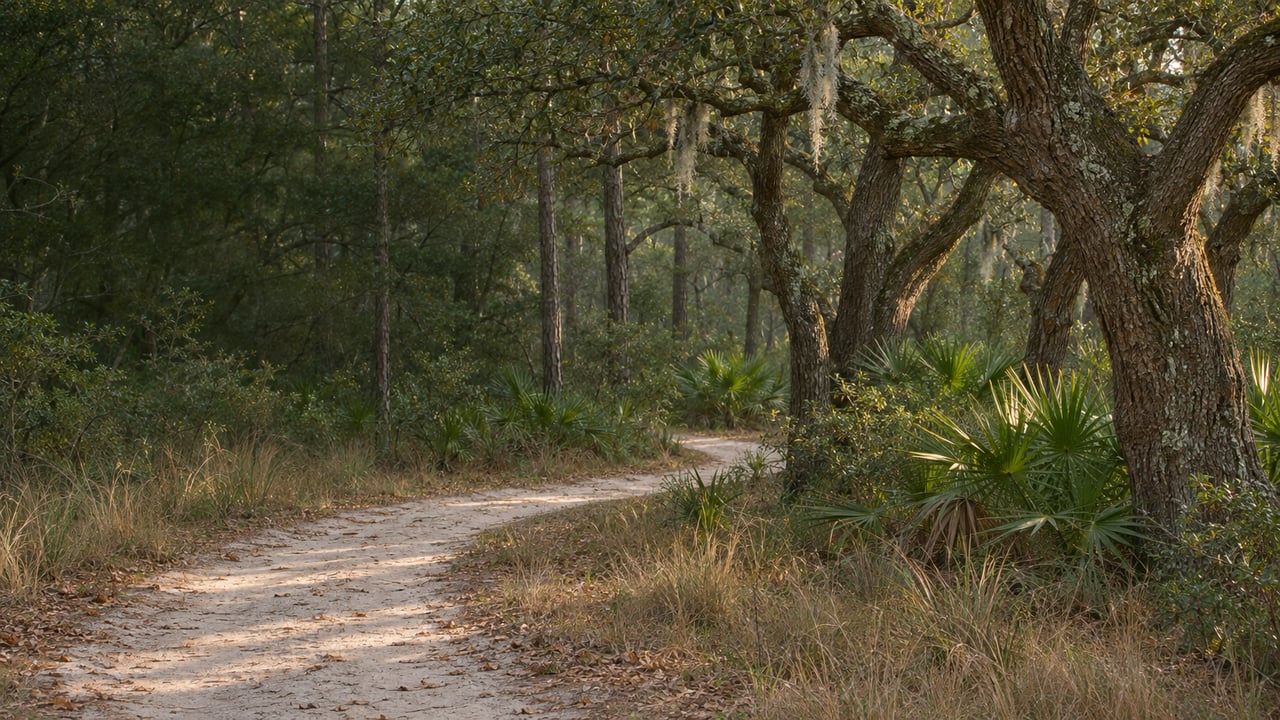
The Palmetto Bluff Conservancy's fall songbird walk at River Road Preserve is the kind of thing that happens quietly here every September, a casual stroll organized by the Palmetto Bluff Conservancy to look for whatever is moving through the rice field remnants and old dike systems that thread the preserve. As October approaches, calendars fill in and cooler mornings can feel like the real start of the season.
That expectation is understandable; migration has its own calendar. The songbirds are already here. By the time October's cooler air arrives, the best variety of the season will have largely passed through.
September Songbird Migration
October often feels like the start of fall, as mornings cool and the community's event calendar fills. Bird migration, however, follows a different schedule.
Warbler migration is already underway. Ornithological guidance on Lowcountry fall migration consistently places the heaviest push of warblers, vireos, and thrushes in the first three weeks of September, with numbers and variety already thinning by the time October arrives. October belongs to something else: raptors, moving along the coast in more visible daytime flights. Both are worth watching. Neither is the same show as what is passing through the maritime forest and old rice fields right now.
What Actually Peaks When
Palmetto Bluff's own field notes make the same distinction, if you read them closely. The community's guidance on fall migration points residents toward River Road Preserve, Sandhill Loop, and Headwaters Nature Trail as the places to bring binoculars, and it names early October as the broader South Carolina peak while noting that songbirds themselves start heading south at the beginning of September and keep moving through late November. Read that as two separate stories layered on top of each other. The state-level peak in early October is driven substantially by raptors and later migrants. The songbird story, the warblers and thrushes that fill a live oak canopy with movement for twenty minutes and then vanish, is a September event that is already well underway.
That distinction matters if you set aside one or two mornings a season to go birding. Wait for October's cooler air and you will still see birds, but you will be watching hawks move down the coast, not working through a mixed flock of warblers in non-breeding plumage, the kind of identification puzzle that makes September mornings genuinely interesting for anyone who bird watches even casually.
Where the Birds Are Actually Working the Bluff
Three places on the property do most of the work this time of year, and each one rewards a slightly different kind of attention.
- River Road Preserve carries the most history of the three. Remnants of old rice fields and their dike systems still shape the land, and the mix of managed forest and wetland edge draws both resident wading birds and the neotropical migrants passing through on their way south. This is where the Conservancy's guided songbird walks meet, and it is worth walking even without a guide.
- Sandhill Loop sits within the same general migration corridor the Conservancy points residents toward, a quieter option for anyone who wants the same habitat mix without a scheduled walk.
- Headwaters Nature Trail runs along Lake Haynes and ends beneath an oversized osprey nest built into an old longleaf pine. Early morning is the reliable window here, whether you are on foot or on a bike, and the trail's mix of longleaf pine habitat and lake edge tends to hold birds even after a slow morning elsewhere on the property.
None of these require a car ride off property. That is worth saying plainly, because the temptation for anyone newly interested in fall birding is to look outward, toward Pinckney Island or one of the barrier island preserves nearby. The Bluff's own 20,000 acres are doing the same work right now, closer to home.
The Guided Version Versus the Solo Walk
The Conservancy's songbird walks this season run September 14, October 19, and November 9, from 9 to 11 in the morning, meeting at the Conservancy Classroom at 655 Old Moreland Road. Walk-ins are welcome, no reservation required, which makes it an easy thing to add to a weekday without planning around it. What the guided version adds is not access, since the trails themselves are open to residents regardless, but interpretation. Conservancy staff walk the same ground every week and know which stretch of the preserve had activity yesterday, which is the kind of local knowledge that turns a quiet walk into a productive one.
If the September date did not work, the October and November walks are still worth going on. Just go with the right expectation. By mid-October, the mix shifts toward the birds passing through later in the season, and the wide-open variety of a September morning, when a dozen species might move through the same stretch of canopy in under an hour, has already thinned.
For anyone who likes to document rather than just observe, the Conservancy also runs a seasonal Bluff Blitz, a week built around photographing and logging whatever is out on the property to iNaturalist. It is a different kind of outing than the songbird walks, more inventory than birding, but it fits the same broader pattern of a community that treats its land as something to actively study rather than simply enjoy from a porch.
What This Means If You Live Here
If you have been telling yourself you will get serious about the fall birds once the weather turns, move that plan up. The mornings right after a cold front passes tend to be the most productive, when birds that have been moving overnight settle into the nearest cover to rest and feed before continuing south. Check the forecast for the first real front of the season and plan a morning at River Road Preserve or Headwaters Nature Trail within a day or two of it. Waiting for October is not wrong, exactly. It is just a different bird, in a different month, and if what you actually wanted was the warbler flocks that make September mornings genuinely absorbing, that window does not stay open long.
I live here too, on the same trails, watching the same seasonal shift most of you are watching. It is one of the small pleasures of calling Palmetto Bluff home, the sense that the land itself has a calendar worth paying attention to, separate from the community's own. If you are curious about more of what makes a particular corner of this property tick, or you are thinking further down the road about a move within the Bluff itself, I am always glad to talk. You can reach me through Lori Whatley to request a private consultation, or simply to compare notes on what you saw out on the trail this week.