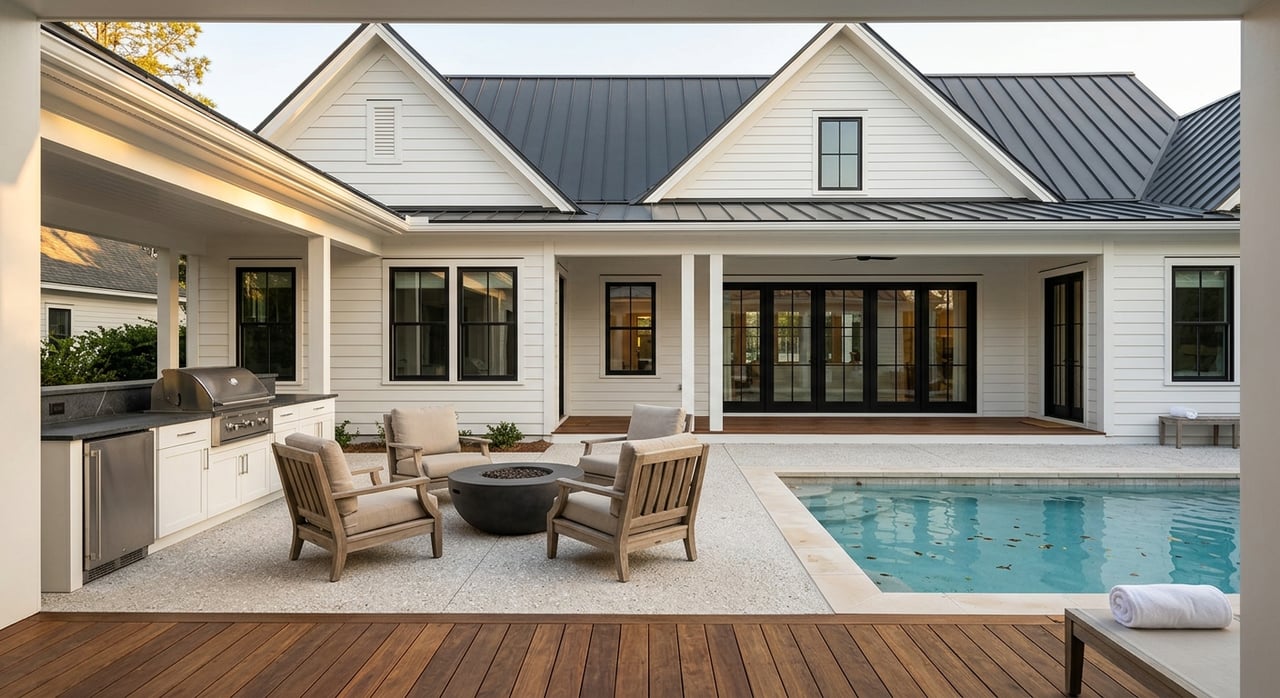
If you are drawn to Palmetto Bluff, chances are you are not just buying a house. You are buying a way of living that feels connected to river breezes, shaded porches, and long views through the trees. In this part of the Lowcountry, outdoor space is not a bonus feature. It is often the heart of the home. Let’s look at the outdoor living spaces that define Palmetto Bluff homes and what they can tell you as a buyer or owner.
Why outdoor living matters here
Palmetto Bluff sits within a remarkable natural setting shaped by the May River, broad waterfront edges, and a large land plan that spans 20,000 acres with 32 miles of waterfront. That setting naturally influences how homes are designed and how people use them day to day. In many cases, the outdoor room is just as important as the kitchen or living area.
The climate also plays a major role. According to NOAA climate normals for a nearby coastal station, the average annual temperature is 67.2°F, with warm summer highs reaching 88.9°F in June, 91.8°F in July, and 90.3°F in August. With that kind of weather, shade, airflow, screening, and covered gathering areas are practical features that help make outdoor spaces comfortable through much of the year.
Bluffton’s history adds even more context. The town notes that families were drawn to the bluff for its high ground and cool river breezes, especially as a relief from hotter, low-lying areas. That long connection between comfort and climate still shows up in how Palmetto Bluff homes are planned today.
Porches define the lifestyle
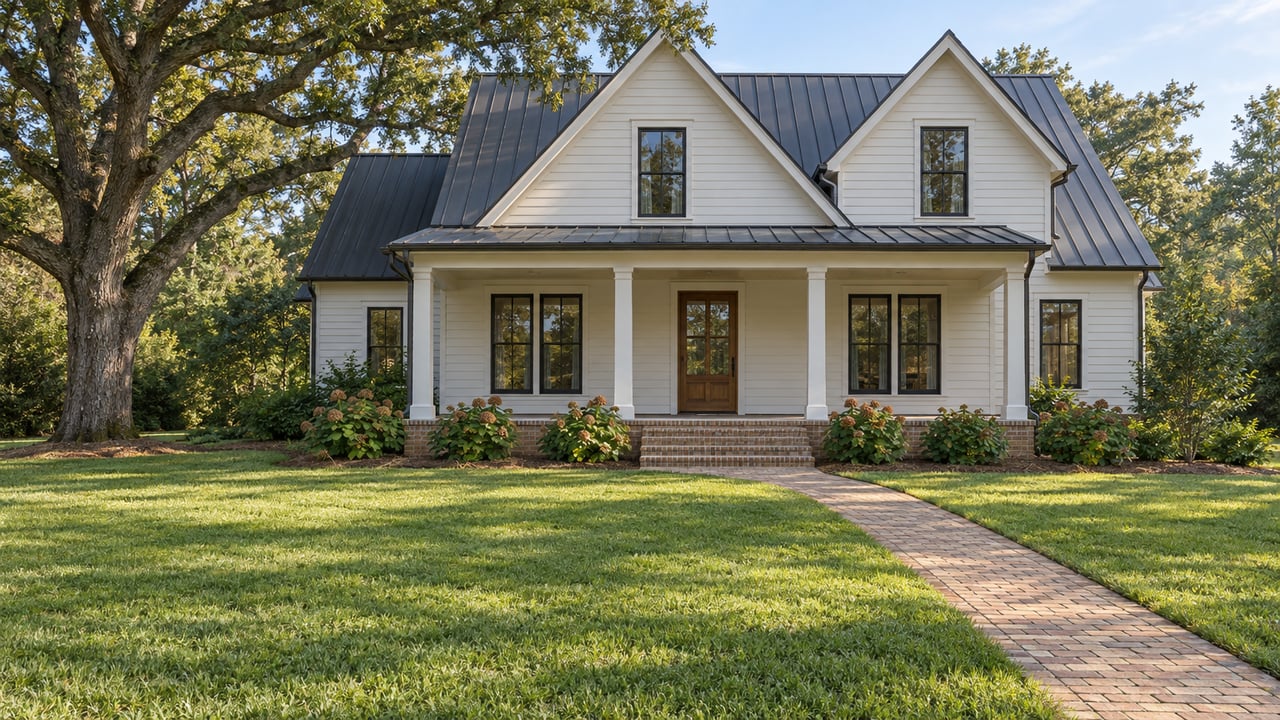
If one feature stands above the rest in Palmetto Bluff, it is the porch. The community’s own design language describes many homes as essentially being a porch with a home attached. That idea says a lot about local priorities.
Porches here are not narrow entry platforms meant only for curb appeal. Palmetto Bluff requires porches to be at least 8 feet deep, which helps turn them into true outdoor rooms. That extra depth gives you space for dining, lounging, reading, or gathering with guests in a way that feels natural and useful.
You will also see different versions of the same concept. Some porches are open to catch breezes and views. Others are screened or louvered, which can help balance comfort, privacy, and protection from heat or insects.
Screened porches and verandas add flexibility
A screened porch is one of the most recognizable outdoor features in Palmetto Bluff homes. It gives you the feeling of being outside while offering a layer of comfort that matters in the Lowcountry climate. That is one reason screened spaces show up again and again in official home features throughout the community.
Wraparound verandas also reflect the area’s architectural roots. Palmetto Bluff’s architecture emphasizes deep porches, raised foundations, and homes oriented to capture sun, air, and coastal views. These spaces are not random add-ons. They are part of the home’s structure and identity from the start.
For buyers, this matters because a well-designed veranda or screened porch can expand how you use your home. It can serve as a quiet morning sitting area, an evening dining space, or a relaxed place to gather with family and guests without needing a major indoor footprint.
Courtyards and breezeways create layered living
Many Palmetto Bluff homes go beyond a single porch and create a sequence of outdoor spaces. Official home spotlights feature private courtyard gardens, breezeways, covered balconies, and screened gathering areas that work together as a connected system. This layered approach is one of the details that makes the homes feel so tied to their surroundings.
A courtyard can offer a more intimate outdoor experience than a front or rear porch. It may create a protected place for coffee, dining, or quiet relaxation while still bringing in light and air. In some homes, the courtyard becomes a visual anchor that links multiple parts of the property.
Breezeways are another classic element. They help connect separate spaces while encouraging airflow and a stronger sense of openness. In a climate where comfort depends on shade and movement of air, these details are both beautiful and functional.
Outdoor kitchens and fire features support gathering
Outdoor living in Palmetto Bluff often centers on entertaining. Home features highlighted by the community include built-in brick grills, pizza ovens, wet bars, grilling patios, fire pits, and screened porches with tabby or brick fireplaces. These are not rare luxury extras. They are part of the established design language.
That matters if you enjoy hosting or simply want a home that supports casual gathering. An outdoor kitchen or grilling patio can make entertaining feel easy and connected to the landscape rather than separated from it. A fire pit or fireplace can also extend the use of the space into cooler evenings and create a natural focal point.
Even semi-custom plans in The Grove include private courtyards, screened porches, and optional outdoor kitchens. That shows how strongly outdoor cooking and gathering are woven into the current lifestyle expectations of the community.
Pools, docks, and terraces complete the picture
In Palmetto Bluff, outdoor living often extends far beyond the porch. Pool terraces, water views, and in some cases covered docks help create a more complete outdoor environment. Rather than serving as isolated features, they often connect directly to screened porches, fire features, and landscaped gathering areas.
Community wellness amenities reflect the same priorities. The River House features a 100-foot heated saltwater pool with May River views, while Moreland Village includes a zero-entry family pool and an adult lap pool. At the private home level, this same indoor-outdoor rhythm often appears in backyards that blend relaxation, swimming, and open-air entertaining.
If you are comparing homes, it helps to think of the backyard as a full lifestyle setting. A terrace, pool, or dock may be most valuable when it works together with the porch, view, and landscaping to create a cohesive experience.
Design choices that make outdoor spaces work
Beautiful outdoor living is not just about adding furniture or features. In Palmetto Bluff, the strongest spaces usually begin with thoughtful siting and design. The community’s architectural guidance makes it clear that homes are oriented to maximize breezes, sunlight, and coastal views.
That means the best outdoor spaces often feel effortless because they were planned around the land itself. A porch that catches the breeze, a sitting area that frames a marsh view, or a courtyard that brings in daylight can all feel more valuable than a larger space with less intention behind it.
Materials also play a major role. Palmetto Bluff homes often use board-and-batten siding, metal roofs, oyster tabby, Savannah brick, natural or reclaimed wood, and gas lanterns. These finishes help outdoor rooms feel grounded in the Lowcountry setting rather than disconnected from it.
Landscaping tends to support that same goal. Native plantings and reduced lawn areas are commonly used around homes and pools, helping outdoor spaces blend more naturally with the tree canopy, marsh edges, and river environment. The result is often a softer, more integrated feeling.
Design review shapes what you see
One reason Palmetto Bluff has such a consistent sense of place is the role of the Design Review Board. The community states that the board exists to protect the natural surroundings and maintain a cohesive, regionally authentic settlement. Professional design submissions are required, including South Carolina-registered architects and landscape architects.
For you as a buyer, seller, or renovation-minded owner, this matters. Outdoor living spaces here are shaped not only by taste, but also by community standards. That can help preserve long-term visual harmony and reinforce the architectural character that draws many people to Palmetto Bluff in the first place.
It also means renovations and new outdoor features should be approached with care. In this market, successful design is usually about working with the setting and community expectations, not against them.
What buyers should look for
When touring Palmetto Bluff homes, it helps to evaluate outdoor space with the same attention you give the interior. A beautiful porch photo is not enough on its own. You want to understand how that space actually lives.
Here are a few practical things to notice:
- Porch depth: Palmetto Bluff requires porches to be at least 8 feet deep, and that depth often makes the difference between decorative and truly usable.
- Screening and shade: In a warm, humid climate, screened areas, covered sections, fans, and fireplaces can improve comfort significantly.
- Orientation: Pay attention to how the home captures breezes, daylight, and views of water, marsh, or gardens.
- Layered outdoor rooms: A strong property may combine porch, courtyard, terrace, and fire feature into one connected experience.
- Landscape integration: Native planting and a restrained landscape approach can make the home feel more settled into its surroundings.
These details often shape daily enjoyment more than square footage alone. In Palmetto Bluff, exterior livability deserves nearly the same weight as interior layout.
Neighborhood character can influence outdoor style
Outdoor living is a defining theme across Palmetto Bluff, but the expression can vary by area. Official examples show River Road leaning toward screened porches and fireplaces, while Moreland Forest’s Grove plans emphasize courtyard living and optional outdoor kitchens. That makes neighborhood character an important part of your search.
If you picture long evenings on a screened porch with a fireplace, one area may feel like a better fit. If you prefer a more private courtyard-centered layout with flexible outdoor cooking space, another may align more closely with your goals. The right match is often about how the outdoor spaces support your routines and priorities.
This is where local guidance becomes especially valuable. Two homes with similar square footage can offer very different outdoor experiences depending on orientation, lot placement, and neighborhood design patterns.
Why this matters for sellers
If you plan to sell a Palmetto Bluff home, your outdoor spaces deserve thoughtful presentation. Buyers in this market are often looking for a complete lifestyle, not just a list of rooms. A porch, courtyard, pool terrace, or fire feature should be shown as part of the home’s daily livability.
That means preparation matters. Clean sightlines, well-kept furnishings, thoughtful lighting, and landscaping that feels intentional can all help buyers understand the value of the space. In a porch-first community, exterior presentation can have a major influence on how your home is perceived.
The strongest marketing also connects those features to how the home lives. Instead of simply noting a screened porch or outdoor kitchen, it helps to show how those spaces create comfort, flow, and connection to the setting.
The takeaway for Palmetto Bluff living
What defines outdoor living in Palmetto Bluff is not one feature alone. It is the way porch, courtyard, pool, fire feature, landscape, and view work together. The most memorable homes tend to create an experience that feels natural, comfortable, and deeply connected to the Lowcountry environment.
If you are buying, that means looking beyond finishes and asking how the exterior spaces truly function. If you are selling, it means presenting those spaces as central to the home’s identity. In either case, understanding outdoor living is essential to understanding what makes Palmetto Bluff so distinctive.
If you are considering a move, a sale, or a private search in Palmetto Bluff, Lori Whatley offers discreet, knowledgeable guidance shaped by local residency and a deep understanding of how buyers value the Lowcountry lifestyle.
FAQs
What outdoor feature is most associated with Palmetto Bluff homes?
- Porches are the signature feature, and community design standards require them to be at least 8 feet deep so they function as true outdoor living rooms.
Why are screened porches so common in Palmetto Bluff?
- Screened porches help balance outdoor enjoyment with practical comfort in a warm, humid climate where shade, airflow, and protection from insects matter.
How does climate affect outdoor living in Palmetto Bluff?
- Warm temperatures and regular rainfall make covered spaces, fans, fireplaces, screening, and shaded gathering areas especially useful for year-round comfort.
What should buyers evaluate in a Palmetto Bluff outdoor space?
- You should look at porch depth, orientation, breezes, views, screening, shade, and how well patios, courtyards, pools, and landscaping work together.
Do Palmetto Bluff renovations need design approval?
- Yes, the community states that the Design Review Board oversees design standards and requires professional submissions to help protect the area’s natural and architectural character.
Do different Palmetto Bluff areas emphasize different outdoor styles?
- Yes, official examples suggest some areas lean more toward screened porches and fireplaces, while others emphasize courtyard living and optional outdoor kitchens.