If you are thinking about buying land or building new in Palmetto Bluff, the biggest decision is not the house plan. It is the strategy behind the lot, the setting, and the path to approval. In a community shaped by conservation, design review, and long-term value, smart choices early can save you time, protect your investment, and help you create a home that truly fits how you want to live. Let’s dive in.
Why land strategy matters first
Palmetto Bluff is not a typical neighborhood. It is a 20,000-acre community with 32 miles of riverfront, and its development approach is tied closely to stewardship of land, water, wetlands, and cultural heritage.
That matters because your homesite is doing more than holding a house. It shapes your view, your privacy, your relationship to trails and amenities, and the design options available to you from the start.
Palmetto Bluff’s own guidance puts lot selection before floor plan refinement. In practical terms, that means you should begin with the setting you want most, then design around it.
Start with the right village
Neighborhood choice in Palmetto Bluff is a strategic move. Each village has its own character, and that character affects both your day-to-day experience and the kind of home that feels most natural there.
Wilson Village offers established character
Wilson Village is the first village in the community and remains one of the most established areas. It has a more traditional, town-like feel and includes several of the community’s most recognized neighborhoods.
If you want a classic Palmetto Bluff setting with a strong sense of place, this area often appeals to buyers looking for an established environment.
River Road emphasizes formal landscapes
River Road sits between Wilson and Moreland and is known as the Garden District. It has a more formal and classic architectural character, with a strong emphasis on landscape.
For buyers who appreciate structure, symmetry, and a polished Lowcountry feel, River Road can be a strong fit.
Moreland Village feels relaxed and current
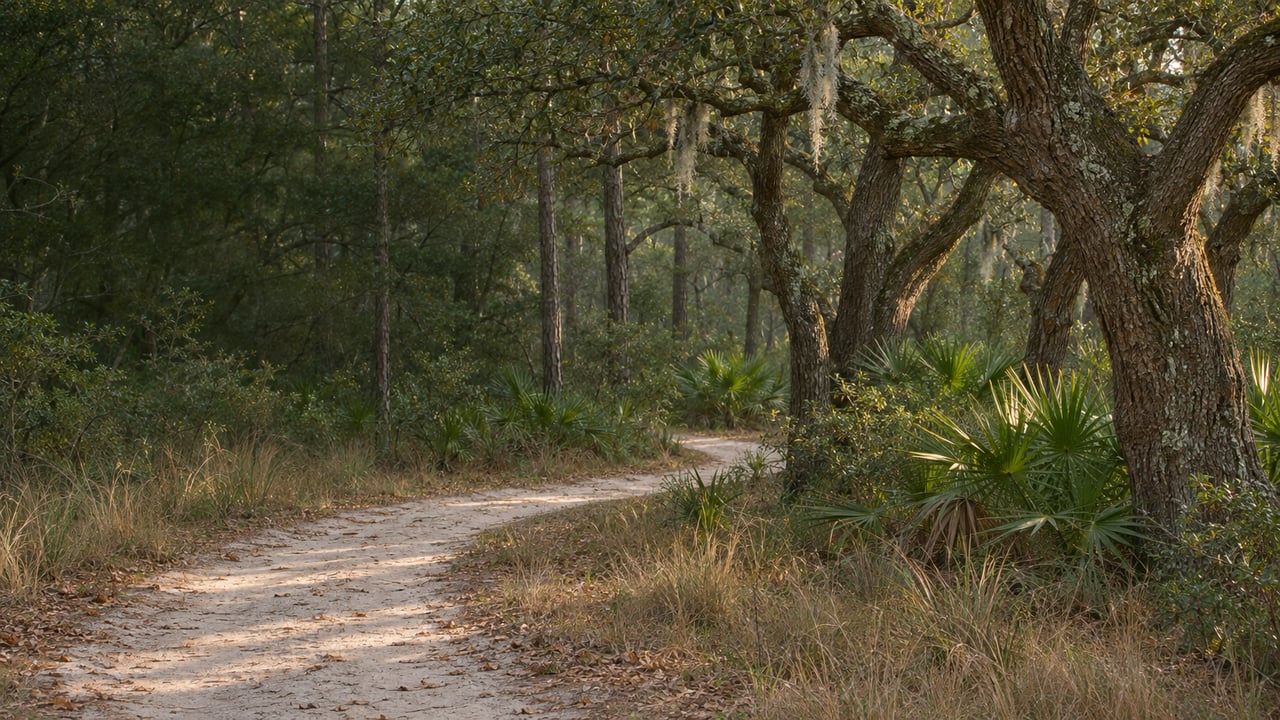
Moreland Village moves away from the more traditional vocabulary seen elsewhere in the community. It leans more rural, informal, and contemporary, with direct access to trails and amenities.
If your priority is a nature-forward setting with a looser, more current design language, Moreland may align well with your goals.
Moreland Forest is the newest release
Moreland Forest is the newest residential release, with 14 homesites ranging from 0.33 to 0.51 acres. It is positioned near the Inland Waterway and Crossroads, which gives it strong proximity to a growing part of the community.
For buyers who want newer inventory and close access to this corridor, Moreland Forest deserves a careful look.
Anson Village is a longer-timeline play
Anson Village is planned as the final village on the southeastern edge of the property. The community describes future river and marsh views, along with planned golf and marina components.
That makes Anson Village a different kind of opportunity. If you are thinking with a longer horizon, phase timing becomes part of the strategy.
Match the lot to your lifestyle
In Palmetto Bluff, views are a major value driver. The community specifically highlights river, marsh, and forest views, and each one creates a different living experience.
A river view may offer a dramatic sense of openness. A marsh view may bring changing light and a layered landscape. A forest setting may feel more private and sheltered.
When you evaluate homesites, it helps to think beyond the house itself. Ask how you want to feel when you arrive, where you want outdoor living to face, and how close you want to be to village activity, trails, or water access.
Understand the design review process early
One of the most important parts of a new construction strategy in Palmetto Bluff is understanding that approval is layered. Your plans must work at the community level and at the county level.
The Palmetto Bluff Design Review Board exists to protect the natural surroundings and maintain a cohesive regional aesthetic. Professional design submissions are required regardless of project size, and each submission must include South Carolina-registered architects and landscape architects.
This is why the most effective planning happens before a formal submission. The earlier you align your architect, landscape thinking, and homesite conditions, the smoother the process tends to be.
Trees and native landscaping shape the plan
In Palmetto Bluff, tree and landscape work are not minor details. Owners must submit an arborist report, the Conservancy must approve tree removal, and native plant landscaping is expected.
That means mature trees can be both a major asset and a real design constraint. A homesite may be beautiful because of its canopy, but that same canopy can influence building placement, driveway layout, and outdoor living areas.
Design should fit the village
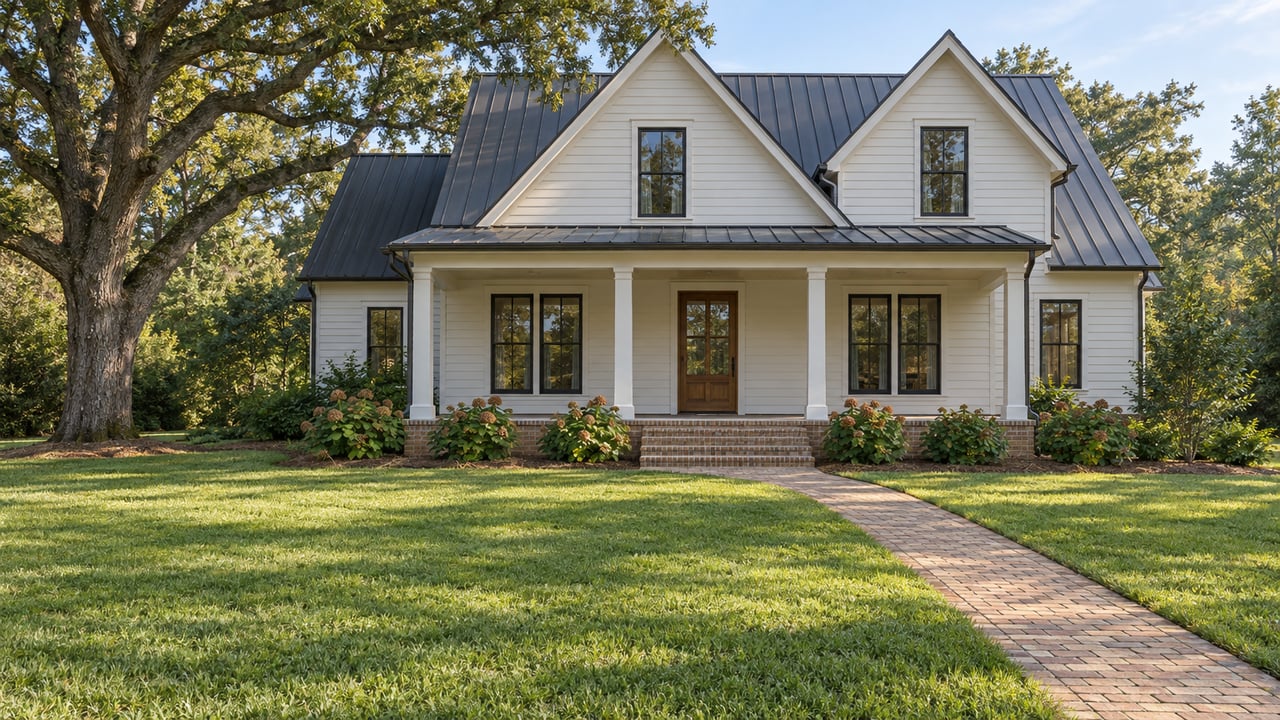
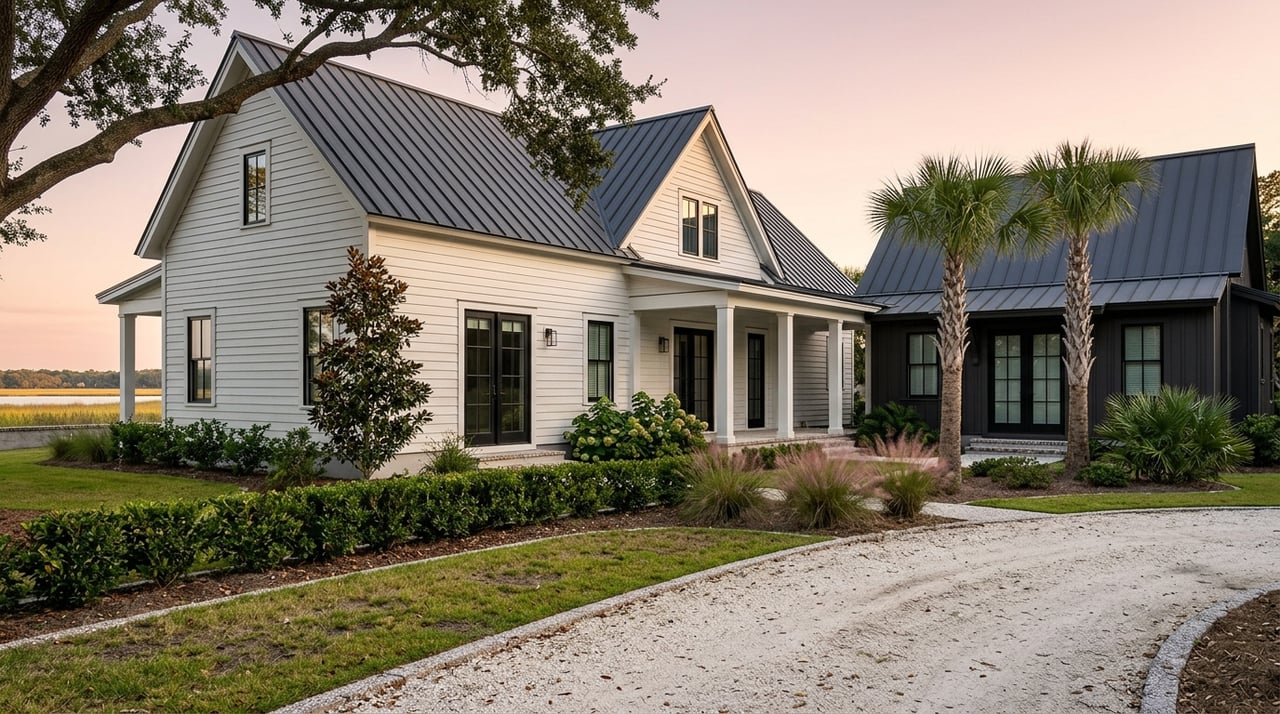
Palmetto Bluff’s architectural guidance favors features such as wraparound verandas, porches, raised foundations, and detached secondary structures that feel connected to the Lowcountry landscape. The goal is not just a beautiful house, but a house that belongs in its setting.
From a value perspective, that matters. Homes that feel tailored to the lot and compatible with the village character are generally easier to position well over time than homes that push against the community’s design language.
Beaufort County adds another approval layer
Beyond community review, Beaufort County requires its own permitting process for residential construction. The county requires a zoning permit first, along with site plans showing setbacks, septic tank permit or sewer verification, and a 911 address.
After zoning approval, the building permit package requires contractor and subcontractor license information, printed and digital plans, and trade documents such as HVAC, plumbing, electrical, and REScheck materials.
Permits must be posted on site, and inspections must be requested at least the day before. This is one reason why timing expectations should include more than construction alone.
Floodplain review can affect cost and design
Floodplain and coastal review can materially affect what you build and what it costs. Beaufort County regulates development in Special Flood Hazard Areas using FEMA Flood Insurance Rate Maps, with effective maps published in 2021 for the unincorporated area.
County forms may also require flood verification documents, V Zone Certification, or Coastal A Certification depending on the site. If a homesite has floodplain considerations, those conditions should be understood early so they can be reflected in the design and budget.
Tree and river buffer rules also matter
County rules protect certain trees and river buffers in unincorporated Beaufort County. Disturbing the river buffer without a permit from Planning and Zoning is not allowed, and some tree removal may require a permit.
This reinforces an important point for homesite buyers: natural features are part of the value story, but they are also part of the entitlement story.
Choose between custom and turnkey
Buyers in Palmetto Bluff generally have two broad paths. You can pursue a custom build for maximum control, or you can consider a built-for-sale home already underway.
Neither path is automatically better. The right choice depends on how involved you want to be, how quickly you want to move, and how much flexibility you need.
Custom building gives you more control
If you want the home to respond closely to your lot, your view corridor, and your priorities, custom building offers the most control. It also requires more planning on the front end.
The highest-leverage steps usually happen before design submission:
- Choose the right village and homesite
- Confirm the view corridor and orientation
- Engage an architect who understands the DRB process
- Treat the tree survey and arborist work as part of early entitlement planning
This approach can help you make better decisions before time and money are committed to a full design package.
Turnkey can reduce decision fatigue
Palmetto Bluff Builders offers built-for-sale homes that are already in progress. Buyer changes are limited once construction is underway, but this path can simplify the process for buyers who prefer a more streamlined experience.
The builder states that homes typically finish in about 14 months. Even then, it is wise to remember that county permitting, flood-related documentation, and inspection scheduling can affect the front end of the overall timeline.
Think about timing like an investor
Even if you are buying for personal use, timing still matters. In a place like Palmetto Bluff, phase timing, inventory scarcity, and design discipline all play a role in long-term value.
The community’s 2025 year-end recap reported 143 closed properties totaling $322.1 million. That included 91 homes averaging $2.95 million and 52 homesites averaging $1.08 million.
The same report noted that only 4.7% of privately owned homes were listed at any given time, with 45 active resale home listings averaging $3.52 million, 12 active homesite listings averaging $901,000, 133 homes under construction, and 58 more in design review.
Those numbers point to a market shaped by scarcity and long-hold ownership. In that kind of environment, lot selection and design choices carry extra weight.
Earlier versus later phase opportunities
Moreland Forest represents a current release with a limited number of homesites in a growing corridor. Anson Village represents a future-phase opportunity tied to planned amenities and a longer timeline.
In broad terms, earlier-phase opportunities may offer scarcity and exposure to future appreciation, while later-phase opportunities may come with more clarity around eventual amenities and neighborhood buildout. Your strategy depends on whether you value immediacy, optionality, or longer-horizon positioning.
Build for enjoyment and future resale
In a design-driven community, resale value is not only about square footage or finish level. It is also about how well the home fits the lot, the village, and the broader Lowcountry setting.
The most resilient homes tend to feel distinctive without feeling disconnected from their surroundings. Quality materials, native landscaping, strong siting, and a design that respects neighborhood criteria can all support value preservation over time.
That does not mean your home should feel generic. It means the best outcomes often come from balancing personal taste with the coherence buyers already value in Palmetto Bluff.
A smart strategy begins before you build
The clearest lesson in Palmetto Bluff is simple: success starts before the first sketch. Site selection, trees, view corridors, flood conditions, village character, and approval paths all shape what is possible.
When you approach land and new construction with a clear strategy, you are better positioned to protect your time, budget, and long-term goals. In a market this nuanced, thoughtful guidance can make the entire process calmer and more precise.
If you are weighing homesites, evaluating a new construction path, or comparing custom versus built-for-sale opportunities in Palmetto Bluff, Lori Whatley offers discreet, high-touch guidance grounded in local knowledge and a thoughtful, relationship-first approach.
FAQs
What is the first step for buying land in Palmetto Bluff?
- Start by choosing the right homesite and village based on your preferred view, lifestyle, and neighborhood character before focusing on floor plans.
What design approvals are required for a Palmetto Bluff new build?
- New builds must go through the Palmetto Bluff Design Review Board, and submissions require professional design input from South Carolina-registered architects and landscape architects.
What tree rules apply to Palmetto Bluff homesites?
- Tree removal is not automatic. Owners must provide an arborist report, the Conservancy must approve tree removal, and Beaufort County also protects certain trees and river buffers.
How long does new construction in Palmetto Bluff take?
- Palmetto Bluff Builders says built-for-sale homes typically finish in about 14 months on average, but permitting, flood documentation, and inspections can affect the overall timeline.
What is the difference between Wilson, River Road, and Moreland in Palmetto Bluff?
- Wilson Village is more established and town-like, River Road is more formal and landscape-driven, and Moreland has a more rural, informal, and contemporary character.
What should buyers know about Beaufort County permits for new homes?
- Beaufort County requires zoning approval first, then a building permit package with plans, licensing details, and trade documents, along with compliance for inspections and site posting.
Why do floodplain conditions matter for Palmetto Bluff construction?
- Floodplain and coastal review can affect home design, documentation requirements, and project cost, especially for sites in Special Flood Hazard Areas.
Is a custom home or turnkey home better in Palmetto Bluff?
- A custom home offers more control over design and site response, while a built-for-sale home can offer a simpler process with fewer decisions once construction is underway.